
Gutenberg
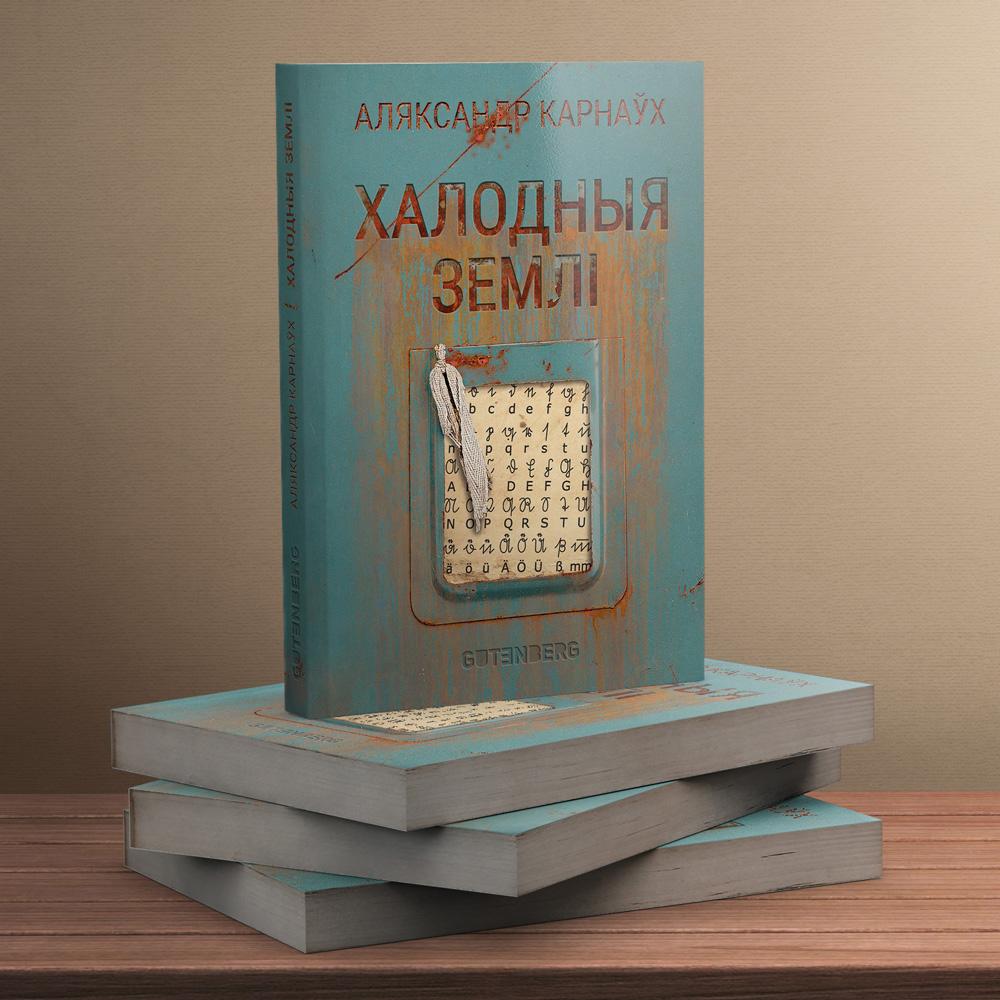
Cold lands
Cold lands
Аўтар: Alexander Karnavkh
Low stock: 5 left
Couldn't load pickup availability
Мова: Belarusian
Старонак: 424
Год выдання: 2025
Месца выдання: Krakow
Вокладка: soft
Фармат: 14.5x21 cm
ISBN: 978-83-68016-38-3
The novel "Cold Lands" is a journey into a world where the personal intertwines with the historical, and the pain of loss acquires an unexpected connection to the mysteries of the past. Anthos, a lecturer at a crossroads in his life, receives a stack of mysterious notebooks written in Sütterlin – a script that few can read today. But the deeper he delves into the texts, the more profound the mirror of his own history becomes. This novel captivates with the atmosphere of a Belarusian village near the Prorva swamp, where legends and reality coexist, and forces one to ask questions for which the answers are not always simple.
***
University lecturer Anthos loses his faithful friend, a beagle named Argus. At the same time, his wife decides their marriage has run its course. Looking for a hobby to occupy his mind, Anton agrees to help an acquaintance decipher the text of mysterious notebooks found in an attic in a village near Prorva – a swamp where the main character's grandfather also lived. The notebooks are written in Sütterlin, a now-forgotten German script. Only individual words are decipherable, but the more the character understands, the more anxiously he looks into the mirror.
If you live near Prorva, it's easier to believe in werewolves than in uninterrupted mobile communication.
But our main character is a city dweller. Anthos, a university lecturer, loses his faithful friend, Argus the beagle. At the same time, his wife decides that their marriage has run its course. Looking for a hobby to occupy his mind, Anton agrees to help an acquaintance and decipher the text of mysterious notebooks found in an attic in a village near Prorva – a swamp where the main character's grandfather also lived. The notebooks are written in Sütterlin, a now-forgotten German script. Only individual words are decipherable, but the more the character understands, the more anxiously he looks into the mirror.
________________________________________
QUOTE FROM THE BOOK:
The notebooks were varied. Too varied to be united by any common characteristic, word, or appropriate description. Some were thin, barely thicker than an ordinary school notebook, others thick, fleshy, like Piedmontese bulls. Paper covers, oilcloth covers, cardboard covers, notebooks entirely without covers… About twenty, no less. Stacked haphazardly, for it was impossible to stack them evenly; they tilted to the side and threatened to fall, to crash down from the table onto the mokka and coffee cups.
— May I? — I asked.
— Yes, of course, — Yasia nodded, — take a look. This is just a part, so you get an idea.
The manuscript lying on top was an ordinary general notebook. Clamping the edge with my thumb, I fanned through it. It smelled of dust and old paper. Then I opened it at a random spot. The light, squared pages, without margins, had not yet yellowed. They were covered in neat, dense handwriting: lines ran across each grid line, the letters sometimes leaning to the right, sometimes straightening up like soldiers on parade, sometimes beginning to fall to the left, as if a wind had swept through this marching formation and toppled the ranks of brave Prussian soldiers.
— It resembles boustrophedon, — Yasia said.
— What? — I didn't understand.
— It's a method of writing. Even lines go from left to right, odd lines from right to left.
That's all I needed! If so, my fate was bitter – I would have to track the line numbers so as not to confuse the direction.
— So it's boustrophedon?
— No.
— Thank God, — I muttered.
— What do you think?
I put the notebook aside, took another, flipped through it. The same picture: dense text, variable slant. Not a single drawing, not a single familiar word. The tangle of symbols blurred my eyes.
— How do you decipher this?
— It's a matter of habit, — Yasia shrugged. — Nothing complicated.
The next convolute was assembled from thin school notebooks, joined together, glued and bound – neither more nor less: a real book. Unlike the previous one, this looked very old: it smelled of mold, and constellations of dark spots were scattered across its yellowed pages. Several headings caught my eye – short inscriptions of a few words between large sections of text.
— It seems they were in different places.
— That's right, — Yasia confirmed. — Part of the notebooks was hidden in a suitcase in the attic; we found a small number in the house among the books. Those in the suitcase were better preserved.
— Maybe they're just newer? Is there any chronological sequence to them?
Myatelskaya thought for a moment.
— Probably, but I don't know anything about it. To distinguish them somehow, I call the worse ones the Elder Edda, and the newer ones the Younger.
— Original, — I said.
— Pour me some coffee, — Yasia looked at her husband.
He carefully filled the cup almost to the brim and cautiously handed it to her. Myatelskaya, with a steady hand, brought the cup to her lips, spilling not a drop, and took a sip.
— Well, what do you think? — she repeated her question.
— I told you, I agree.