
Самвыдат
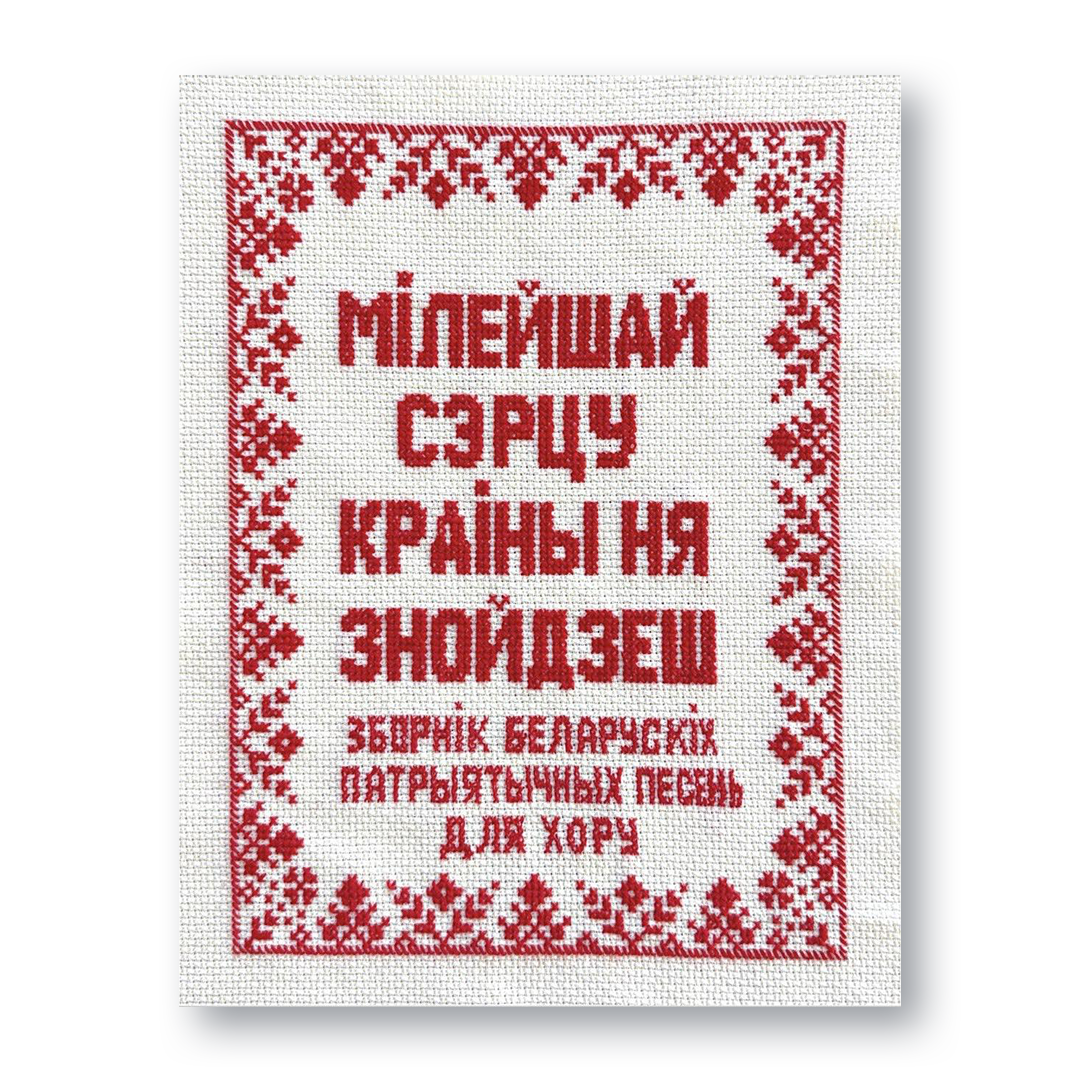
You won't find a country dearer to your heart. A collection of patriotic songs for choir
You won't find a country dearer to your heart. A collection of patriotic songs for choir
Аўтар: Tatyana Hrynevich-Matafonava
Low stock: 6 left
Couldn't load pickup availability
Мова: Belarusian
Старонак: 72
Год выдання: 2026
Месца выдання: Istanbul - Warsaw
Вокладка: soft
Фармат: A4
ISBN: 978-83-973180-1-4
"You won't find a country dearer to your heart" – this is a unique collection of Belarusian patriotic songs for choir, the result of many years of work by researchers, musicians, and guardians of cultural heritage. The book gathers restored melodies, rare musical notations, and songs that long existed only in memory and oral tradition. This is not just a songbook, but a living bridge between generations, a testament to the fact that Belarusian song preserves memory, pain, and hope even in exile.
***
One could say that this collection is the result of 100 years of work by Belarusians. In 2022, I noticed a very interesting songbook compiled by Kastus Verabey, and in February 2025, it was sent to me, and I was eager to create a version with sheet music. Some songs had already been performed by the "Unia" choir and were published in the collection "Godnyia Pesni," while others needed to be re-recorded and re-arranged for the choir. I recorded "Yak shyroka i dalyoka," "Nyoman," "Ya liubliu husty shumy," and "Partyzanski marsh" from Ala Orsa-Ramana's voice, as the sheet music was nowhere to be found. While recording the songs, Ala and I discussed the lives of Belarusians in emigration, and how they preserved their Belarusian identity:
"After the war, an accredited gymnasium for girls was established in the Belarusian camp in Regensburg [Ala's father created it along with many Belarusians]. The main emphasis was supposed to be Mykola Kulikovich, who also conducted the gymnasium choir. Regensburg had its own separate choir in the camp. We all attended both choirs then. I would have preferred to attend ballet and folk dances with Villauka Liauchuk. But all my friends were in the choir, so we all went there together, sometimes deliberately singing off-key as a joke.
Regensburg was small, he conducted the choir calmly, sometimes telling stories while they practiced, picking up his violin to show a tone, then leaving again. Mostly, they sang Belarusian folk songs, always a cappella. Kulikovich, however, always sat at the piano, and if someone made a mistake, he would correct it by playing the piano, letting us hear where we had erred. They sang songs of national youth and revival, all with Kulikovich's accompaniment.
Every week there was a performance in the camp; Ukrainians, Germans, and other nationalities came to listen to us. Sometimes we traveled to other camps for performances. Such was the patriotic upbringing from Kulikovich and Regensburg for the rest of our lives."
Through these stories, I felt as if I was transported back in time and was alongside those prominent Belarusians. This led to an even greater understanding of the value of the material I was working with.
The authorship of the song "Hey, naperad" was unknown. Siarzhuk Sokalaŭ-Voyush found out: "The music for the poem 'Hey, naperad' was written by Anton Hrynievich, Aliaksey Turanoŭ, and Mikola Churkin. I cannot find the sheet music... I need to search further in West Belarusian publications, as it was sung quite actively there." After these notes, they were found at home in the "Belarusian Calendar" of 1923, sent by Yanina Hrynievich. What is surprising is that the song, which everyone loved and sang almost like a folk song, was completely forgotten after 100 years, and if not for the sheet music, its restoration would have been impossible.
Mikola Kulikovich's collections "Patriotic Belarusian Songs for Choir" and Vyachaslaŭ Saliakh-Kachanski's "Collection of the Belarusian Soldier," as well as the sheet music Kiryla Nasau left me at our last meeting, were with me in Istanbul. There was a desire to continue performing them (we started doing this in Belarus in 2020) together with my son Adam (he sang tenor and bass, and soprano and alto). The experience gained during 12 years of my work in the State Chamber Choir of the Republic of Belarus proved useful for such recordings. When we started working on this collection, I also started singing tenor and bass, because, while arranging or editing a song, I could immediately make a recording and check if everything written was in place.
Songs for which I no longer had sheet music from Kiryla Nasayeu, I restored from various sources and memories. The "Unia" choir also gratefully helped: some melodies were picked up from recordings, others from oral transmissions. This work was a real return in time, into the environment of Belarusian choristers who preserved culture and language in exile.
Larisa Hienij once said that in poetry, not only the word but also the spirit behind it is important. It was this spirit that I tried to preserve in every song. Every melody is not just sounds, but also history, memory, pain, and hope.
When the work on recording the songs was long completed, I felt great gratitude to those who helped me in this endeavor. These included researchers, performers, and everyone who carefully preserved the sheet music and recordings.
Alla Orsa-Ramana's account of Kastus Verabey: "Kostsik sang well, had a good ear and voice. He always knew where to raise, where to lower. He not only sang, but also loved and understood music. I remember how he worked with the choir: attentively, calmly, with respect for everyone."
All this experience is the foundation of the collection. I hope that it will live on, that these songs will again be heard in choirs and families, on stages and in homes.
Rereading this preface, I retain the joy of the work done. This is not just a book – it is a bridge between generations, a testament to the fact that Belarusian song lives on.
Siarzhuk Sokalaŭ-Voyush
Yanina Hrynievich, Musicologist