
Gutenberg
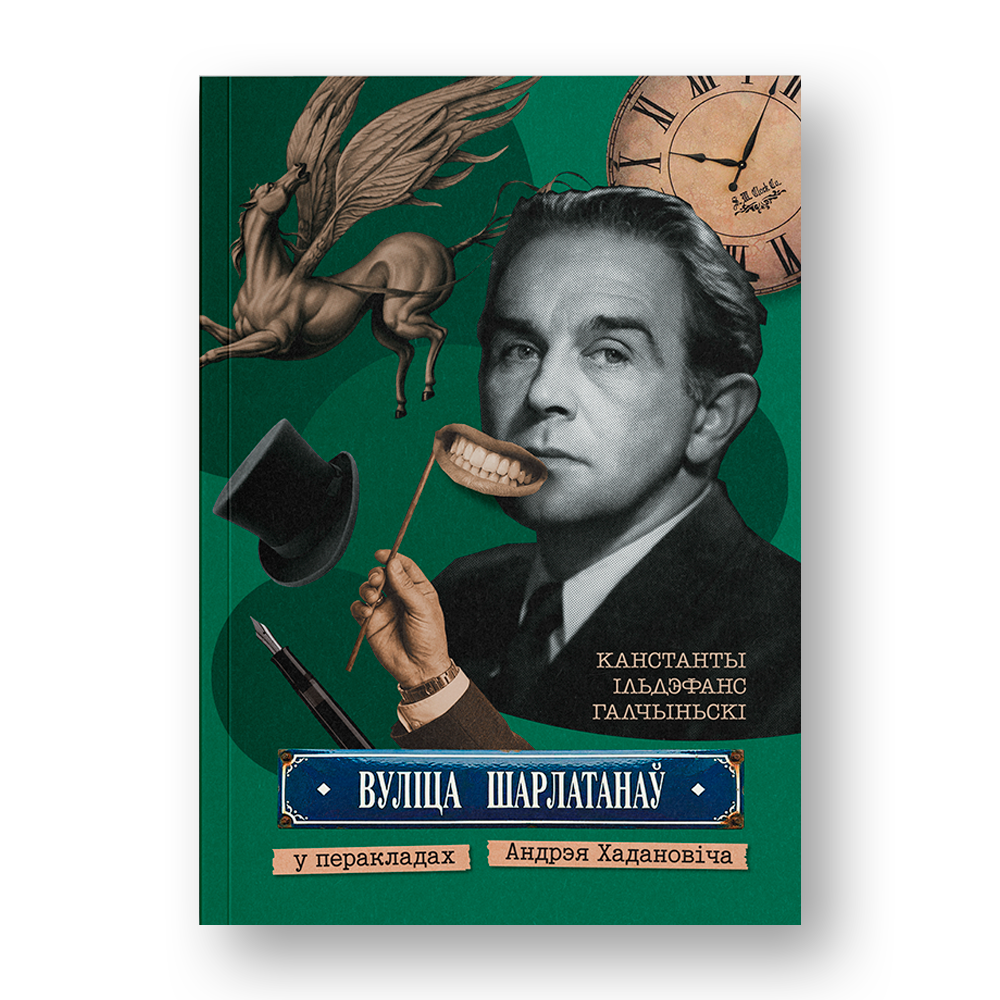
Charlatan Street
Charlatan Street
Аўтар: Konstanty Ildefons Gałczyński
Пераклад: from the Polish of Andrej Khadanovich
Low stock: 5 left
Couldn't load pickup availability
Мовы: Belarusian, Polish
Старонак: 464
Год выдання: 2026
Месца выдання: Kraków
Вокладка: soft
Фармат: 14.8x21 cm
ISBN: 978-83-68016-96-3
He wrote with green ink and did not write for the drawer, for he craved contact with the audience that adored him. In the interwar period, he enjoyed bohemian fame, and nationwide popularity after the war. He experienced both massive print runs and publishing bans. The creator was often "cancelled" (and people still try to today) for right-wing or left-wing opportunism, yet he truly knew nothing of politics, as he believed sincerely only in inspiration, poetry, and the virtuoso craftsmanship of a poet. Have you guessed who it is?
He spent six years in German captivity, where he "remained silent as a rock," but the few poems he wrote became legendary. He wandered through Europe for a year because returning to "People's" Poland meant the loss of poetic freedom. And yet he returned, because his wife and daughter were at home — and the Polish language, which he knew how to listen to. And in the territory of absurdity and (self-)irony, he reclaimed a space for free creativity, inaccessible to "more serious" authors. He was the best Polish poet in the worst of times for poetry.
He was not an ideal husband, but who else has so sung the praises of their wife and the harmony of family life in such brilliant verses? A connoisseur and music lover, he created his best poems according to musical principles. A polyglot and polymath, he drew from the depths of culture like few others.
And besides, Gałczyński... translates well into Belarusian. Many translations from the book "Seventh Heaven" (2006) — from Leanid Dranko-Maisiuk to Maria Martysevich — confirm this. And "Street of Charlatans," which you hold in your hands, is the most complete Belarusian edition of the poet. Half of the poems and poetic works collected here are printed in our language for the first time or in new translations made for this book.
(c) Andrei Khadanovich